genre american
Bebop
1940s–mid-1950s · Harlem & 52nd Street, New York
Jazz's modernist revolt: small combos, racing tempos and advanced harmony — Parker and Gillespie turned a dance music into an art music.
Bebop was invented after hours. At Minton’s Playhouse in Harlem in the early 1940s, young swing-band sidemen — Charlie Parker, Dizzy Gillespie, Thelonious Monk, Kenny Clarke — ran experiments the dance floor never asked for: tempos too fast to dance to, melodies built on the upper extensions of the chords, drummers dropping “bombs” instead of keeping four-square time (Gioia 2011).
The result, captured on records like Parker’s “Ko-Ko” (1945), redefined what jazz was for. A combo of five replaced the big band; the audience sat and listened; virtuosity and harmonic daring became the point. Jazz traded mass popularity for the status of an art music — a trade it never reversed.
In this site’s web, bebop is a hinge: every later jazz style is either a continuation of it (hard bop, free jazz) or a reaction to it (cool jazz’s lowered temperature) — and its harmonic language eventually reached genres far outside jazz, from bossa nova’s chords to the sampled horn stabs of hip-hop.
Connections
Roots, siblings & influences

Built by swing-band sidemen in after-hours sessions — partly as a revolt against the dance band's commercial constraints.
What grew from it

Made by bebop musicians — Miles Davis first among them — who kept the harmonic sophistication and dropped the aggression.
The History of Jazz · Kind of Blue: The Making of the Miles Davis Masterpiece
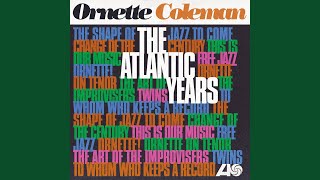
Free jazz took bebop's emphasis on individual expression and improvisational daring to its logical conclusion: if bebop freed melody from swing's regular patterns, free jazz freed it from harmony itself.
The improvising language and personnel came from the bebop lineage — most fusion founders were Miles Davis sidemen.

Modal jazz was a direct response to bebop's complex, fast-moving chord progressions — replacing harmonic complexity with the spaciousness of extended scales.
Kind of Blue: The Making of the Miles Davis Masterpiece · The History of Jazz
Post-bop took bebop's harmonic sophistication and improvisational language and extended them — toward modal approaches, asymmetric phrase lengths and more complex rhythmic organization.
The History of Jazz · Kind of Blue: The Making of the Miles Davis Masterpiece
Key artists

Sources
- The History of Jazz — Ted Gioia (2011). Oxford University Press (2nd ed.; first published 1997) · Book
Discussion
Comments
Read the conversation or sign in with Google to add your own note.