All nodes
Everything in the web, as text — the same data that draws the graph.
Genres
-
West African Roots
genreThe musical traditions carried by enslaved Africans — call and response, polyrhythm, bent notes, the banjo — that became the foundation of nearly all American vernacular music.
-
Spirituals
genreSacred songs created by enslaved African Americans — sorrow songs and ring shouts that fused Christian texts with African musical practice, later carried to the world by the Fisk Jubilee Singers.
-
Proto-Blues
genreField hollers, work songs, and songster ballads of the post-Emancipation rural South — the unrecorded matrix out of which the blues crystallized around 1900.
-

Ragtime
genreThe first Black popular music form with a broad white audience: Scott Joplin's syncopated piano compositions gave American music its characteristic lilt and made 'rag' a synonym for modernity.
-
Jazz
genreBorn in New Orleans from brass bands, ragtime and the blues: collective improvisation that became America's art music and the blues' worldly cousin.
-
New Orleans Jazz
genreThe music that became jazz: collective improvisation on a brass-band structure, born in Storyville and the second-line parades, carrying everything that followed in its DNA.
-

Delta Blues
genreIntense, guitar-driven blues of the Mississippi Delta plantations — slide guitar, moaned vocals, and the songbook that Chicago would later electrify.
-

Stride Piano
genreHarlem's piano wars: Fats Waller, James P. Johnson and Willie 'The Lion' Smith turned the rent party into a competitive sport and the jazz piano into a one-man orchestra.
-
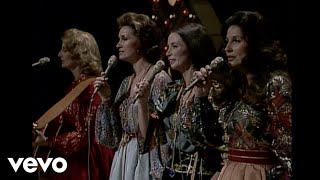
Country
genreWhite Southern vernacular music — British ballads on an African banjo — recorded from 1922 and sold as 'hillbilly', the blues' estranged sibling.
-

Gospel
genreThe modern Black sacred music built by Thomas A. Dorsey from spirituals and blues technique — the training ground for soul and for half the great voices of American popular music.
-

Swing
genreJazz as America's pop music: big bands, arranged riffs and dance floors — Ellington, Basie and Goodman at the center of the swing era.
-
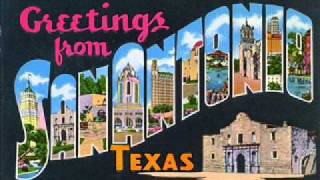
Western Swing
genreBob Wills and the Texas Playboys: country music played with a jazz band's improvisational spirit and a dance hall's sense of joy — the most ecstatic hybrid in American roots music.
-

Gypsy Jazz
genreDjango Reinhardt's Paris invention: American swing played on Romani strings — Europe's first original jazz dialect, alive in campsites and clubs to this day.
-

Honky Tonk
genreCountry music moves to the barroom: electric guitars, steel, and Hank Williams's songs of drinking, divorce and damnation.
-

Bebop
genreJazz's modernist revolt: small combos, racing tempos and advanced harmony — Parker and Gillespie turned a dance music into an art music.
-

Bluegrass
genreBill Monroe's high-velocity string-band modernism: banjo rolls, close harmony and the 'high lonesome sound' — old-time music rebuilt as virtuoso art.
-

Chicago Blues
genreThe Delta blues plugged in: amplified guitar, harmonica, drums and bass, forged in South Side clubs and pressed by Chess Records into the blueprint for rock.
-
Rhythm and Blues
genrePostwar Black popular music: jump-blues shouters, honking saxophones and vocal groups — the commercial engine that carried the blues to rock 'n' roll and soul.
-

Cool Jazz
genreBebop with the temperature lowered: lyrical, spacious, often modal — 'Birth of the Cool' to 'Kind of Blue', and the bridge to bossa nova.
-

Rock 'n' Roll
genreBlues rhythm and form aimed at teenagers: Chuck Berry's guitar stories and Elvis Presley's Sun sessions turned Black rhythm and blues into a national youth music.
-
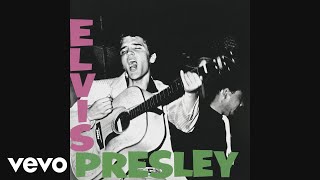
Rockabilly
genreThe hillbilly side of rock 'n' roll: blues drive and country twang slapped together at Sun Records — Elvis, Carl Perkins, Johnny Cash, Jerry Lee Lewis.
-

Soul
genreGospel fervor with worldly words: Ray Charles lit the fuse, Stax and Motown built the factories, and soul became the sound of the civil rights era.
-

Nashville Sound
genreChet Atkins and Owen Bradley's polished country: strings, backing vocals and pop production values that rescued country's commercial fortunes but alienated the honky-tonk faithful.
-

Modal Jazz
genreMiles Davis's solution to bebop's complexity: replace hundreds of rapidly changing chords with a single scale and let the melody flow free — Kind of Blue and a new way of thinking about improvisation.
-
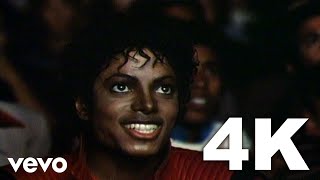
Pop
genrePopular music in its most distilled form: the song built for maximum reach, refined by Motown's discipline and exploded into global dominance by Michael Jackson and the music video era.
-
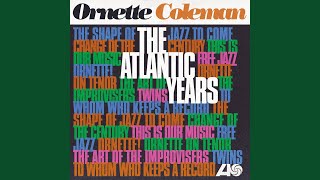
Free Jazz
genreOrnette Coleman's liberation: no chord changes, no fixed meter, no agreed key — improvisation returning to pure melody and pure feeling, the most radical gesture in jazz history.
-

Motown
genreBerry Gordy's dream factory: the 'Sound of Young America' that turned gospel-rooted soul into precision pop, reaching every demographic through craft, discipline and the Funk Brothers.
-
Post-Bop
genreJazz after bebop but before free: the classic quartet recordings of Coltrane, Herbie Hancock and Wayne Shorter — demanding music that maintained structure while pushing every boundary within it.
-
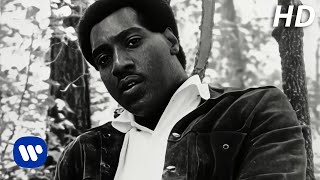
Southern Soul
genreThe raw counterpart to Motown's polish: Stax Records in Memphis and the Muscle Shoals studios delivered soul with sweat still on it — horn-led, church-raw, and deeply Southern.
-
Merseybeat
genreLiverpool's guitar-group boom: American rock 'n' roll, girl-group harmonies and hard club apprenticeship condensed into bright, urgent beat music.
-

Surf Rock
genreCalifornia's sun-and-wave mythology in guitar form: reverb-soaked instrumentals and close harmonies that made the Pacific coast a pop paradise before the British arrived.
-

British Blues
genreLondon art students learned Chess Records by heart and sold the blues back to America — the Stones, the Yardbirds, Mayall's Bluesbreakers, Cream.
-

Garage Rock
genreTeenagers in garages playing the British Invasion back louder and sloppier: raw, reverb-drenched and urgent — the first wave of underground rock that pointed toward punk.
-
British Invasion
genreBritish guitar groups returned American blues and rock 'n' roll to the US charts as a new pop language: Beatles melody, Stones grit, mod attack.
-

Folk Rock
genreBob Dylan's electric turn and the Byrds' ringing twelve-strings: the marriage of folk music's lyrical seriousness with rock's rhythm and amplification.
-
Blues Rock
genreElectric blues stretched to rock volume: riffs, solos and amplifiers turned Chicago forms into the core grammar of late-1960s rock.
-

Funk
genreJames Brown's rhythmic revolution: every instrument a drum, everything on the One — the groove that became the DNA of hip-hop and modern dance music.
-
Psychedelic Rock
genreRock turned inward and hallucinatory: studio experiment, modal jams, drones, feedback and surreal lyric worlds reshaped the pop song.
-

Psychedelic Soul
genreSoul music absorbing the psychedelic moment: extended forms, studio experimentation, social consciousness and blurred genre boundaries — Sly Stone, Marvin Gaye and a reimagined Black music.
-

Country Rock
genreGram Parsons' cosmic American music made commercial: the Byrds' pedal steel, Eagles' harmonies and the Long Beach Ballroom — the bridge that let country and rock share an audience.
-
Hard Rock
genreBlues rock hardened into riffs, volume and arena force: distorted guitar, heavy drums and high vocals made rock physically larger.
-
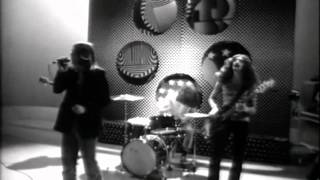
Heavy Metal
genreHarder, darker and louder than hard rock dared: Black Sabbath's downtuned riffs and doom mythology founded a genre that multiplied into dozens of subgenres over five decades.
-
Jazz Fusion
genreJazz plugged into funk and rock: Miles Davis's electric bands and their alumni — Weather Report, Mahavishnu, Head Hunters — rewired improvisation for the amplifier age.
-

Outlaw Country
genreWaylon and Willie's rebellion: long hair, marijuana, self-production rights and a refusal of the Nashville Sound's polish — the outlaw movement gave country its integrity back.
-
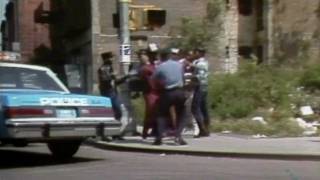
Hip-Hop
genreBorn at a Bronx rec-room party from looped funk breaks: DJing, MCing, breaking and graffiti — the culture that became the dominant popular music on Earth.
-

Old-School Hip-Hop
genreThe founding era: DJ Kool Herc's breaks, Grandmaster Flash's quick-mix theory, the Sugarhill Gang's first recorded rap — before the music had a name or a market.
-

Disco
genreThe club as sacred space: four-on-the-floor kick drum, string orchestration and the DJ as priest — disco created the infrastructure of dance music culture and its aftermath never ended.
-
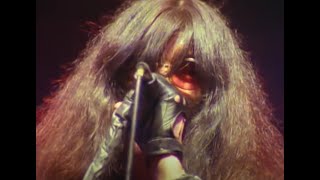
Punk Rock
genreThe year-zero reset: strip rock of its excess, play fast, be angry — the Ramones and the Sex Pistols dismantled rock's cathedral and handed the keys to anyone who wanted them.
-

Country Pop
genreCountry for the mainstream: Dolly Parton's crossover, Kenny Rogers' movies-for-radio and the format that made Nashville the most commercially efficient music city in America.
-
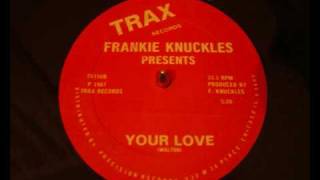
Chicago House
genreBorn at The Warehouse: the genre DJ Frankie Knuckles and Ron Hardy built from disco's ashes in Black and Latino gay Chicago clubs — four-on-the-floor drums, synthesizer basslines and the DJ as conductor.
-
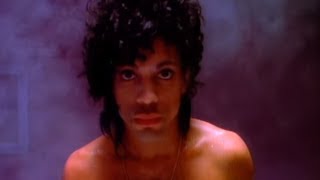
Minneapolis Sound
genrePrince's studio invention: a funk-rock-electronic synthesis from Minneapolis that was tighter, weirder and more sexually charged than anything Motown or New York had produced.
-
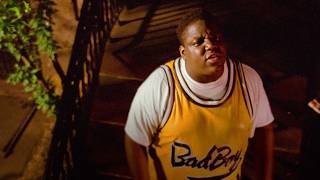
East Coast Hip-Hop
genreThe genre's birthplace and its most lyrically sophisticated branch: from the Bronx's founding parties through the golden age of the Notorious B.I.G. and Nas to Wu-Tang's mythology.
-

Alternative Rock
genreThe big tent outside the mainstream: indie labels, college radio and the underground that sustained R.E.M., Sonic Youth and the Pixies before Nirvana proved the audience was there all along.
-

Electro
genre'Planet Rock' fused Bronx hip-hop with Kraftwerk's machine-funk: drum machines and vocoders that seeded Miami bass, Detroit techno — and, abroad, funk carioca.
-
House
genreThe genre that never stopped: from Chicago's Warehouse to global pop production, house music's four-on-the-floor pulse and gospel-tinged piano chords became the most enduring sound in electronic dance music.
-

Detroit Techno
genreThe Belleville Three's machine music: Juan Atkins, Derrick May and Kevin Saunderson fused Kraftwerk with George Clinton and invented the future of dance music in a dying industrial city.
-
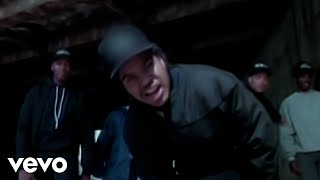
Gangsta Rap
genreFirst-person accounts of gang life, police violence and street economics: N.W.A's documentary brutality made gangsta rap the most controversial and commercially dominant rap style of the 1990s.
-
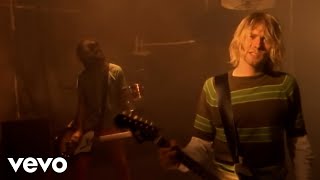
Grunge
genreSeattle's damp, distorted gift to the 1990s: the meeting of punk's DIY ethic and heavy metal's power, landing on mainstream pop radio with Nirvana's 'Nevermind' in 1991.
-

Techno
genreThe machine music that became a global culture: from Detroit's industrial origins through Berlin's Love Parade to the global underground — four-on-the-floor at 130 BPM as a way of life.
-

West Coast Hip-Hop
genreFrom N.W.A's Compton documents to Dr. Dre's G-funk to Kendrick Lamar's Pulitzer: the West Coast built its own hip-hop language around the geography and sonic palette of Los Angeles.
-

Americana
genreThe roots music umbrella: folk, country, blues, gospel and bluegrass recombined without commercial pressure — Emmylou Harris, Uncle Tupelo, Gillian Welch and a tradition that doesn't know it should be obsolete.
-
Trap
genreAtlanta's contribution to hip-hop's global dominance: hi-hat triplets, heavy 808 bass, drug economy narratives — trap redrew hip-hop's center of gravity from New York and Los Angeles to the South.
Artists
-

King Oliver
artistLouis Armstrong's mentor and the cornet king of Chicago: the man who brought New Orleans jazz north and gave it its first great recordings.
-

Jelly Roll Morton
artistThe first jazz composer: the New Orleans piano genius who claimed to have invented jazz and, unlike most people who make similar claims, had the music to back it up.
-

Charley Patton
artistThe first great star of the Delta blues — a gravel-voiced showman at Dockery Plantation whose rhythm and repertoire taught the entire next generation.
-
Duke Ellington
artistComposer at the piano: half a century of writing for his own orchestra, from the Cotton Club to the concert hall — swing's deepest catalog.
-
Louis Armstrong
artistThe first great soloist: his 1920s Hot Five records moved jazz's center from the ensemble to the improviser, and his phrasing taught American music how to swing.
-

Son House
artistPreacher turned bluesman whose slide guitar and testifying voice defined Delta intensity — recorded in 1930, rediscovered in 1964.
-

Count Basie
artistThe Kansas City swing master: Basie's orchestra played with a looseness and power that made every other big band sound stiff — rhythm section first, everything else second.
-
Django Reinhardt
artistTwo working fingers and a new genre: the Romani guitarist who answered American swing with Europe's first original jazz voice.
-
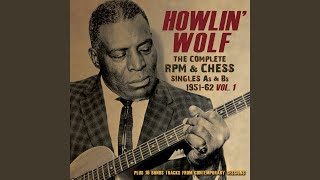
Howlin' Wolf
artistChester Burnett, Charley Patton's most formidable student: three hundred pounds of voice that made 'Smokestack Lightnin'' and gave the Chicago blues its thunder.
-

Bill Monroe
artistThe Father of Bluegrass: his mandolin, his high lonesome tenor and the band he called the Blue Grass Boys defined an entire genre that carries his home state's name.
-
Mahalia Jackson
artistGospel's greatest voice: a New Orleans contralto who refused to sing secular music and made 'Move On Up a Little Higher' a million-seller from the church.
-
Robert Johnson
artistDelta blues' posthumous king: twenty-nine songs recorded in 1936–37 that became the canon of the blues — wrapped in a crossroads legend the historical record does not support.
-
Muddy Waters
artistMcKinley Morganfield: recorded by Lomax on a Mississippi plantation in 1941, king of the Chicago blues by 1950 — the single clearest bridge from Delta to electric blues.
-

Thelonious Monk
artistThe high priest of bebop: Monk's angular harmonies and deliberate wrong notes turned the piano into a percussion instrument and jazz composition into an art form.
-
Charlie Parker
artist'Bird': the alto saxophonist whose harmonic imagination and velocity defined bebop — modern jazz's founding genius and first martyr.
-

Hank Williams
artistCountry music's founding poet: his voice carried the sound of rural Southern longing, and 'I'm So Lonesome I Could Cry' remains the saddest song ever written.
-
Chuck Berry
artistRock 'n' roll's chief architect: a Chess Records bluesman who aimed blues guitar and country storytelling at teenagers and wrote the genre's foundational songbook.
-
John Coltrane
artistThe jazz search engine: Coltrane spent his brief career systematically exhausting every musical possibility from bebop to free jazz, then died at 40 having changed everything.
-
Miles Davis
artistJazz's serial revolutionary: from Parker's bandstand to 'Birth of the Cool', 'Kind of Blue' and 'Bitches Brew' — he re-angled the music at least four times.
-
The Carter Family
artistCountry music's founding act: A.P.'s collected songs, Sara's stark lead, and Maybelle's 'Carter scratch' guitar, first recorded at the 1927 Bristol sessions.
-
Ornette Coleman
artistThe most controversial man in jazz: Ornette Coleman's free jazz removed harmony and the chord sequence from improvisation and replaced them with pure melodic intuition.
-
Ray Charles
artist'The Genius' who fused church and barroom: 'I Got a Woman' (1954) invented soul by singing gospel with worldly words — then he claimed country too.
-
Sam Cooke
artistThe architect of the gospel-to-pop crossover: a voice of pure grace and a businessman's mind who died just as he was becoming a movement voice.
-

Johnny Cash
artistThe Man in Black: a voice like a freight car on a mountain track, a catalog that moved from rockabilly to folk to gospel to American Recordings, always finding the truth in the dark.
-
Patsy Cline
artistThe voice that redefined country singing: her emotional directness and pop production on 'Crazy' and 'I Fall to Pieces' made the Nashville Sound viable and opened country to mainstream pop audiences.
-
James Brown
artistThe Godfather of Soul and architect of funk: the hardest-working show in music, the rhythm revolution of the One, and the most sampled catalog on Earth.
-

Willie Nelson
artistThe face of outlaw country: his guitar Trigger, his braids, his tax troubles and his inexhaustible catalog make him the most beloved country musician of the last half-century.
-
Elvis Presley
artistThe Sun Records sessions of 1954–55 fused blues, gospel and hillbilly in one voice — and showed the industry that the fusion, sung by a white Southerner, could sell to everyone.
-

Merle Haggard
artistThe Poet of the Common Man: Bakersfield's hard-living voice who made honky-tonk real again and whose prison years gave him the authority to sing about the underside of the American dream.
-

Marvin Gaye
artistThe poet of Motown: 'What's Going On' turned the soul formula toward social consciousness and proved that a pop album could be a sustained moral argument.
-

Herbie Hancock
artistThe most versatile keyboard player in jazz: from Miles Davis's second great quintet to Headhunters funk to the synthesizer explorations — Hancock never found a direction he couldn't follow.
-

Bob Dylan
artistThe poet who rewrote what a song could say: from the folk revival to electric rock to country and back, Dylan's restless movement made him the most influential songwriter in American music.
-
Otis Redding
artistThe voice of Stax: raw, pleading, physically urgent — and the artist who brought Southern soul to the world stage before his death at 26.
-
Aretha Franklin
artistThe Queen of Soul: her voice — forged in her father's Baptist church — carried the raw force of gospel into secular music and defined what soul singing means.
-
Jimi Hendrix
artistBlues guitarist, psychedelic studio radical and hard-rock ancestor who made feedback, distortion and amplification sound like a new instrument.
-
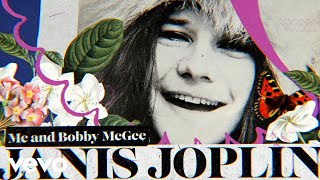
Janis Joplin
artistThe white blues shouter from Texas: her voice — raw, gospel-drenched, physically overwhelming — dissolved the color line in the blues and made her the female voice of the counterculture.
-
Dolly Parton
artistSongwriter, singer, performer and icon: her deceptively simple Smoky Mountain sound contains more craft than Nashville has ever recognized, and 'Jolene' and 'I Will Always Love You' are two of the greatest songs ever written.
-
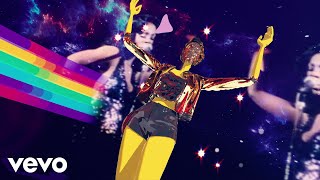
Donna Summer
artistThe Queen of Disco: her collaboration with Giorgio Moroder on 'I Feel Love' invented the all-electronic, synthesizer-driven production that became the DNA of dance music.
-
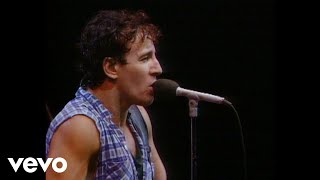
Bruce Springsteen
artistThe Boss: his E Street Band fused rock 'n' roll energy with the narrative ambitions of Dylan and the communal force of soul music, making him rock's great working-class chronicler.
-
Stevie Wonder
artistMotown's prodigy grown into a towering artist: the "classic period" albums of the 1970s synthesized soul, funk, jazz and social urgency into music of unmatched range.
-
Afrika Bambaataa
artistThe Master of Records: ex-gang leader who framed hip-hop as a culture, and whose 'Planet Rock' wired the Bronx to Kraftwerk and invented electro.
-
Grandmaster Flash
artistThe engineer of the turntable: quick-mix theory, scratching and cutting on time — and, with the Furious Five, 'The Message', rap's first masterpiece of reportage.
-
Michael Jackson
artistThe King of Pop: the Jackson 5 alumnus who became the best-selling recording artist of all time, uniting Motown, funk and rock into a global pop language.
-
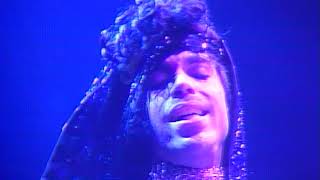
Prince
artistThe architect of the Minneapolis Sound: virtuoso on every instrument, radical in sexual politics, restlessly synthetic — the one-man band who bridged funk, rock and the electronic future.
-
The Beatles
artistLiverpool's beat group who turned rock 'n' roll fandom into modern pop authorship, then made the studio and album central to rock's future.
-

The Beach Boys
artistSun, cars and California harmonies that hid one of popular music's great studio experimenters: Brian Wilson's 'Pet Sounds' and 'Good Vibrations' reached further than surf rock could contain.
-
The Rolling Stones
artistLondon's Chess Records disciples — named from a Muddy Waters song — who carried Chicago blues to the world's biggest stages and never stopped crediting the source.
-
Eric Clapton
artistBritish blues guitarist whose work with the Yardbirds, John Mayall and Cream helped turn Chicago vocabulary into blues rock guitar heroism.
-
The Kinks
artistRay and Dave Davies's London band: British Invasion songcraft with slashed speaker-cone guitar tones and a sharp eye for English social detail.
-
The Yardbirds
artistThe British blues laboratory that passed through Clapton, Beck and Page, turning Chicago repertoire toward feedback, riffs and hard rock.
-
The Who
artistMod pop turned explosive: power chords, feedback, smashed instruments and rock-opera ambition made the band a bridge to hard rock.
-
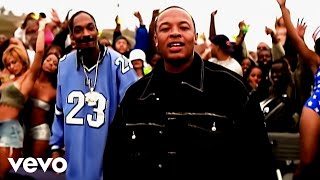
Dr. Dre
artistHip-hop's greatest producer: the Compton beatmaker who invented G-funk with Parliament-Funkadelic samples, built Death Row, then Aftermath, and launched Eminem and Kendrick Lamar.
-

The Doors
artistJim Morrison's dark poetry and Ray Manzarek's organ-bass keyboard lines: the Los Angeles band who made psychedelia literary, theatrical and dangerous.
-
Sly and the Family Stone
artistThe integrated band that merged soul, funk and psychedelic rock: their optimism and rhythmic revolution shaped both funk's future and hip-hop's DNA.
-
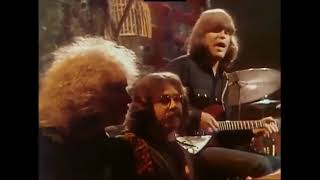
Creedence Clearwater Revival
artistJohn Fogerty's working-class rock from the California Bay Area: swamp-soaked guitars, AM radio hooks and a democratic vision that made them the defining American rock band of 1969–70.
-
Led Zeppelin
artistJimmy Page's post-Yardbirds band turned blues rock into monumental riff, volume and myth: a defining source for hard rock and heavy metal.
-
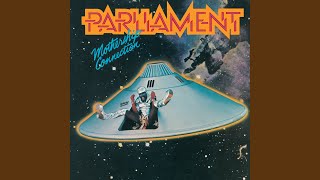
Parliament-Funkadelic
artistGeorge Clinton's mythological funk collective: one organism with two label identities, the Mothership, Dr. Funkenstein, and the most sampled grooves in hip-hop history.
-
Kraftwerk
artistThe robots from Düsseldorf who invented the machine aesthetic: synthesizers, drum machines and the human-machine concept that became the blueprint for all electronic music.
-
Tupac Shakur
artistThe most complete artist of the gangsta rap era: his charisma, vulnerability and contradictions made him a cultural figure of Shakespearean complexity before his murder at 25.
-
The Notorious B.I.G.
artistBiggie Smalls: the greatest pure rapper of the East Coast golden age — fluid, funny, cinematic and technically perfect — murdered at 24 in the middle of a coast war he tried to end.
-
Ramones
artistThe founding punk band: two-minute songs, leather jackets and the 1-2-3-4 that stripped rock of every pretension and gave permission to a generation that couldn't play.
-

Run-DMC
artistThe group that turned hip-hop from a party scene into a global industry: hard beats, street clothes and 'Walk This Way' made rap safe for rock radio and rock audiences safe for rap.
-
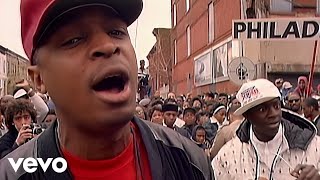
Public Enemy
artistHip-hop as political weapon: Chuck D's prosecutorial raps, Flavor Flav's counterweight, the Bomb Squad's noise collages — the most radical act in the history of popular music.
-
N.W.A
artistNiggaz Wit Attitudes: the Compton collective who invented gangsta rap, reported life in South Central with documentary brutality and terrified the FBI.
-
Nirvana
artistThe band that made alternative rock mainstream: 'Nevermind' dragged underground indie noise into the Top 40 and ended hair metal's commercial dominance overnight.
Events
-
The Great Migration
eventSix million Black Americans left the South between 1910 and 1970 — and carried the blues, gospel and jazz to the cities that electrified them.
-
The Race Records Boom
eventAfter Mamie Smith's 'Crazy Blues' (1920) proved Black audiences bought records, the industry built a segregated 'race records' market — preserving the blues and dividing American music in the same gesture.
Discussion
Comments
Read the conversation or sign in with Google to add your own note.