genre american
Country Rock
late 1960s–1970s · Los Angeles, California
Gram Parsons' cosmic American music made commercial: the Byrds' pedal steel, Eagles' harmonies and the Long Beach Ballroom — the bridge that let country and rock share an audience.
Country rock emerged from the Byrds’ 1968 album Sweetheart of the Rodeo — recorded in Nashville with Gram Parsons as a temporary member, featuring fiddles and steel guitar on country standards — and from Bob Dylan’s turn toward country on John Wesley Harding (1967) and Nashville Skyline (1969). Parsons’ vision of “cosmic American music” — country and rock and gospel and soul mixed without concern for genre boundaries — was the genre’s founding philosophy, even if commercial success eluded him personally.
The Flying Burrito Brothers (Parsons and Chris Hillman, post-Byrds) distilled the idea. Poco, Pure Prairie League and Linda Ronstadt developed it commercially. The genre reached its commercial peak with the Eagles: Jackson Browne, Don Henley, Glenn Frey and associates who took Parsons’ cosmic American music, gave it a studio sheen, and made Hotel California (1977) the best-selling country-adjacent rock album of the decade.
Country rock opened a door between two audiences that had been entirely separate. It also provided the infrastructure for alternative country in the 1980s and 1990s: Uncle Tupelo, the Jayhawks, Wilco and Son Volt — who cited Gram Parsons as the patron saint of what they were doing.
Connections
Roots, siblings & influences
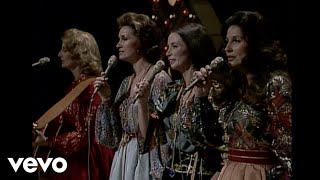
Country rock took country music's vocal harmonies, pedal steel guitar and lyrical subject matter and placed them in rock's electric band context.
Country Music, U.S.A. · Awopbopaloobop Alopbamboom: Pop from the Beginning

Country rock grew from the same folk-rock impulse toward acoustic instruments and lyrical seriousness, taking that impulse in a more explicitly country direction.
What grew from it

Americana grew from country rock's roots impulse — the desire to make music connected to American folk and country traditions — without the commercial compromises.
Key artists

Sources
- Country Music, U.S.A. — Bill C. Malone and Jocelyn R. Neal (2010). University of Texas Press (3rd rev. ed.; first published 1968) · Book
- Awopbopaloobop Alopbamboom: Pop from the Beginning — Nik Cohn (1969). Weidenfeld & Nicolson · Book
Discussion
Comments
Read the conversation or sign in with Google to add your own note.