genre american
East Coast Hip-Hop
late 1970s→ · New York City
The genre's birthplace and its most lyrically sophisticated branch: from the Bronx's founding parties through the golden age of the Notorious B.I.G. and Nas to Wu-Tang's mythology.
East Coast hip-hop is not a unified sound but a geography and a lineage: music made in New York from the genre’s founding in the Bronx through the sampling-heavy golden age of the late 1980s and early 1990s. Its character was shaped by New York’s density, speed and competition: MCs rhymed faster and more technically, producers sampled more obscurely, and lyrical wordplay was valued as much as subject matter.
The golden age centered on a cluster of labels and producers: Def Jam (Public Enemy, LL Cool J, Beastie Boys), Cold Chillin’ (Big Daddy Kane, Biz Markie), Native Tongues (De La Soul, A Tribe Called Quest, the Jungle Brothers) and Bad Boy (the Notorious B.I.G., Mase). The Notorious B.I.G.’s Ready to Die (1994) was the period’s greatest album; Nas’s Illmatic (also 1994) — five dense tracks over sampled jazz loops from producer Large Professor — is the other contender.
The East–West rivalry of the mid-1990s, amplified by the music press and the rivalry between Bad Boy’s Puffy Combs and Death Row’s Suge Knight, ended in the murders of Tupac and Biggie. After 1997, the East Coast maintained its lyrical tradition (Jay-Z, Eminem’s New York years, Wu-Tang Clan’s Staten Island mythology) while commercial dominance shifted South and West.
Connections
Roots, siblings & influences

East Coast hip-hop is hip-hop as it developed in its birthplace — New York — with a continuing emphasis on lyrical complexity and DJ-centered production.
Key artists
-
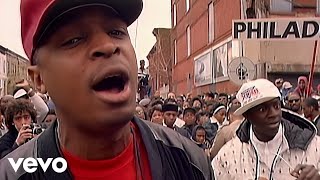
Public Enemy
artistHip-hop as political weapon: Chuck D's prosecutorial raps, Flavor Flav's counterweight, the Bomb Squad's noise collages — the most radical act in the history of popular music.
-

Run-DMC
artistThe group that turned hip-hop from a party scene into a global industry: hard beats, street clothes and 'Walk This Way' made rap safe for rock radio and rock audiences safe for rap.
-
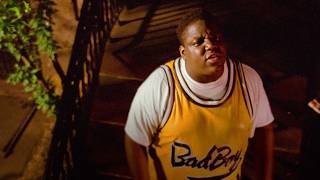
The Notorious B.I.G.
artistBiggie Smalls: the greatest pure rapper of the East Coast golden age — fluid, funny, cinematic and technically perfect — murdered at 24 in the middle of a coast war he tried to end.
Sources
- Can't Stop Won't Stop: A History of the Hip-Hop Generation — Jeff Chang (2005). St. Martin's Press · Book
Discussion
Comments
Read the conversation or sign in with Google to add your own note.