genre american
Old-School Hip-Hop
1973–mid-1980s · The Bronx, New York
The founding era: DJ Kool Herc's breaks, Grandmaster Flash's quick-mix theory, the Sugarhill Gang's first recorded rap — before the music had a name or a market.
Old-school hip-hop encompasses the first decade of the music’s commercial life, from DJ Kool Herc’s 1973 Bronx parties to Run-DMC’s rock crossover of 1986. The term came retroactively — the music didn’t have a consistent name until the industry needed one — but it describes a distinct phase: party-oriented, relatively simple lyrically, organized around the DJ and the break.
The foundational documents: the Sugarhill Gang’s “Rapper’s Delight” (1979) proved rap could be a commercial single; Grandmaster Flash’s turntable innovations made the DJ an instrumentalist; Afrika Bambaataa’s “Planet Rock” (1982) connected the Bronx to Düsseldorf and invented electro. “The Message” (1982) by Grandmaster Flash and the Furious Five was the inflection point that proved rap could carry documentary journalism: “It’s like a jungle sometimes it makes me wonder / how I keep from going under.”
Old-school hip-hop is the period before the genre professionalized and diversified into distinct regional and stylistic schools. Its importance for this graph is architectural: it shows how the four elements (DJing, MCing, breaking, graffiti) coalesced into a culture that would become the world’s dominant popular music.
Connections
Roots, siblings & influences
Old-school hip-hop is hip-hop's first commercial phase: the sounds and artists who built the form before it had an industry or a genre category.

The break — the moment in a funk or soul record when everything drops out but the drums — was the foundational material that DJs looped to create hip-hop.
What grew from it
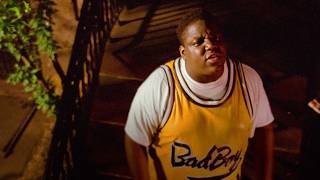
East Coast hip-hop is hip-hop as it developed in its birthplace — New York — with a continuing emphasis on lyrical complexity and DJ-centered production.
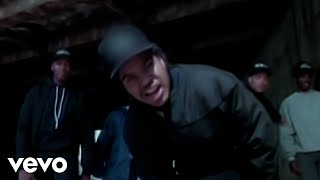
Gangsta rap emerged from hip-hop's broader culture but shifted the subject matter from party and bravado to explicit accounts of gang life and urban violence.
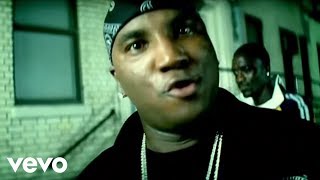
Trap retains hip-hop's core MCing tradition while radically updating the production aesthetic with electronic drum machines and minimalist arrangements.

West Coast hip-hop developed independently from New York's founding scene, drawing on the same roots but developing regional production aesthetics shaped by Los Angeles.
Key artists
-
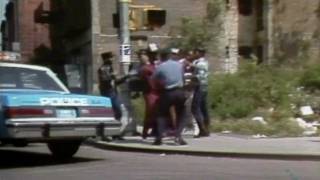
Grandmaster Flash
artistThe engineer of the turntable: quick-mix theory, scratching and cutting on time — and, with the Furious Five, 'The Message', rap's first masterpiece of reportage.
-

Afrika Bambaataa
artistThe Master of Records: ex-gang leader who framed hip-hop as a culture, and whose 'Planet Rock' wired the Bronx to Kraftwerk and invented electro.
-

Run-DMC
artistThe group that turned hip-hop from a party scene into a global industry: hard beats, street clothes and 'Walk This Way' made rap safe for rock radio and rock audiences safe for rap.
Sources
- Can't Stop Won't Stop: A History of the Hip-Hop Generation — Jeff Chang (2005). St. Martin's Press · Book
Discussion
Comments
Read the conversation or sign in with Google to add your own note.