genre american
Chicago House
late 1970s–late 1980s · Chicago, Illinois
Born at The Warehouse: the genre DJ Frankie Knuckles and Ron Hardy built from disco's ashes in Black and Latino gay Chicago clubs — four-on-the-floor drums, synthesizer basslines and the DJ as conductor.
Chicago house was born at The Warehouse club on South Jefferson Street, where DJ Frankie Knuckles played from 1977 to 1983 for a predominantly Black and Latino gay audience that had no other space. He played disco records, gradually mixing in electronic imports from Europe and modified drum machine patterns that extended the groove. The music was called “house” after the club’s name and the sign outside venues that advertised “as played at The Warehouse.”
Knuckles was the genre’s priest; Ron Hardy at the Music Box was its prophet — harder, more ecstatic, playing tapes of unfinished tracks that his audiences would rush to the counter to identify. Trax Records and DJ International industrialized the scene from 1984 onward, releasing tracks by Larry Heard (Mr. Fingers), Marshall Jefferson and Jesse Saunders.
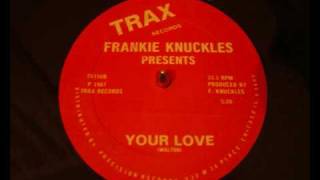
“Your Love” (recorded 1982, released 1987) — Frankie Knuckles’s collaboration with singer Jamie Principle, recorded on a reel-to-reel tape that circulated as a bootleg for five years before official release — is the genre’s founding document. In 2026 it was selected for the Library of Congress National Recording Registry for its cultural significance.
Chicago house’s export to the UK in 1986–88 sparked the Second Summer of Love and the rave movement, and it remains the direct ancestor of virtually all subsequent electronic dance music.
Connections
Roots, siblings & influences

Chicago house emerged directly from disco's underground scene after the mainstream backlash of 1979 — the same audiences, the same clubs, the same four-on-the-floor rhythm.
Sweet Soul Music: Rhythm and Blues and the Southern Dream of Freedom

The groove concept and the centrality of bass come from funk; early house DJs played James Brown and Sly Stone alongside the electronic tracks they were developing.
What grew from it

Detroit techno absorbed Chicago house's four-on-the-floor rhythm and club context while making the music more mechanical, more European and more abstract.
House as a global genre grew from Chicago house's founding aesthetics, developed internationally as producers in New York, the UK and Europe built on the original template.
Sweet Soul Music: Rhythm and Blues and the Southern Dream of Freedom

Techno and house developed in dialogue, sharing the four-on-the-floor kick drum and the DJ-centered club context while diverging in tempo, texture and feeling.
Key artists

Sources
- Sweet Soul Music: Rhythm and Blues and the Southern Dream of Freedom — Peter Guralnick (1986). Harper & Row · Book
- The One: The Life and Music of James Brown — RJ Smith (2012). Gotham Books · Book
Discussion
Comments
Read the conversation or sign in with Google to add your own note.