genre american
Minneapolis Sound
late 1970s–1980s · Minneapolis, Minnesota
Prince's studio invention: a funk-rock-electronic synthesis from Minneapolis that was tighter, weirder and more sexually charged than anything Motown or New York had produced.
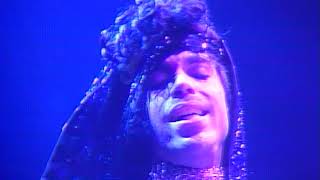
The Minneapolis Sound is inseparable from Prince and the network of musicians, producers and artists he cultivated at Paisley Park, his Chanhassen compound. It began in the late 1970s as Prince developed his multi-instrumentalist approach, playing everything himself or with a small, shifting band (the Revolution), and recording at Paisley Park’s studio with unusual speed and discipline.
The distinctive sonic signature: synthesizer basslines that replaced or doubled bass guitar (most dramatically on “When Doves Cry,” which has no bass at all); live drums mixed unusually dry and prominent; layered synthesizer textures; and Prince’s guitar playing — equal parts Jimi Hendrix, Carlos Santana and something that belonged to no tradition but his own. Over this he layered vocals that could range from Sly Stone’s falsetto to James Brown’s grunt in the same song.
The producers Jimmy Jam and Terry Lewis, initially part of Prince’s extended circle before he fired them from the Time, took the Minneapolis aesthetic to work with Janet Jackson — making Control (1986) the pop crystallization of the Minneapolis Sound’s possibilities. The sound’s tightness and synthesizer-centrism were influential on 1980s pop production globally, from UK synth-pop to American R&B.
Connections
Roots, siblings & influences

The Minneapolis Sound's rhythmic foundation is funk — played live, tight, with synthesizer basslines replacing or augmenting bass guitar.
Prince and his collaborators absorbed hard rock's guitar intensity and applied it to funk structures — 'Let's Go Crazy,' 'When Doves Cry.'

The vocal style and emotional range come from soul, gospel, and Motown — Prince's falsetto is as rooted in the church as Marvin Gaye's.
Sweet Soul Music: Rhythm and Blues and the Southern Dream of Freedom
Key artists
Sources
- Awopbopaloobop Alopbamboom: Pop from the Beginning — Nik Cohn (1969). Weidenfeld & Nicolson · Book
- Sweet Soul Music: Rhythm and Blues and the Southern Dream of Freedom — Peter Guralnick (1986). Harper & Row · Book
- The One: The Life and Music of James Brown — RJ Smith (2012). Gotham Books · Book
Discussion
Comments
Read the conversation or sign in with Google to add your own note.